
Financial Stress Into Progress: Change Your Money Mindset

People spend their entire lives stressed about money. But not for the reasons they think. They are not stressed because they have a budget. They are not stressed because they bought insurance. They are not stressed because they saved money. They are stressed because they did not do those things.
In this episode of The Roy Matlock Jr. Money and Business Hour, Roy explains how changing the way you think about money can help turn financial stress into financial progress. He discusses why many people view budgeting, saving, insurance, and debt reduction as painful, when the real pain often comes from not having those systems in place. It is time to reverse those associations.
Achieving Financial Peace of Mind
The Pain You Think You Are Avoiding
Roy starts with a simple observation. Many people see financial habits as painful. They view budgeting as restrictive. They see saving money as sacrifice. They view insurance premiums as wasted money. They avoid paying down debt because the payments feel like punishment.
So they avoid these steps. They think they are avoiding pain. But they are actually creating it.
The Real Pain — What Happens When You Do Not Act
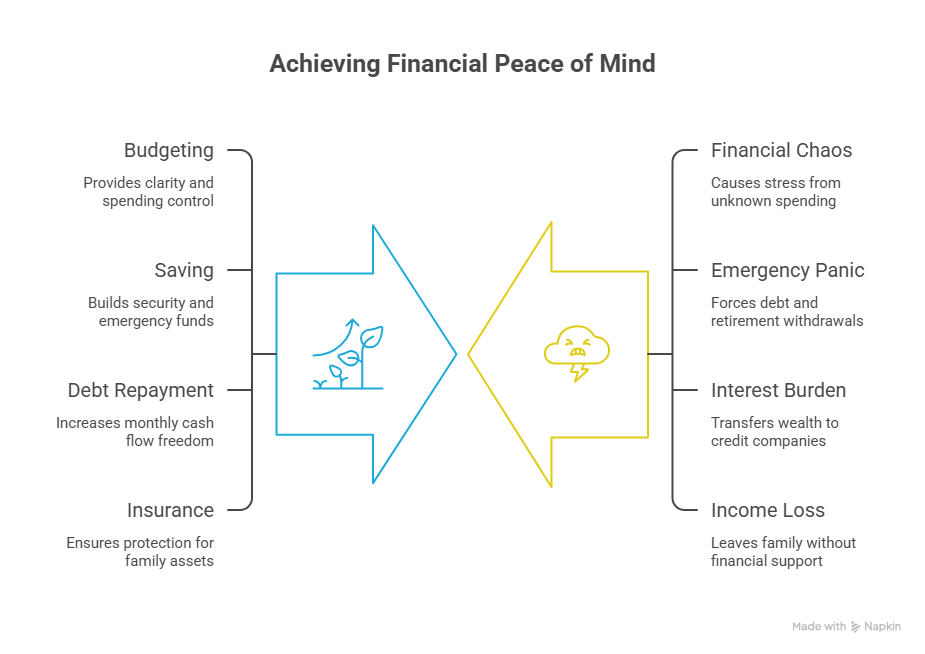
Roy explains that the greater pain comes from not having a budget. When you do not know where your money is going, life is stressful. Bills pile up. You do not know if you can make it to the next paycheck. That is painful.
The real pain comes from not having an emergency fund. When an emergency hits and you do not have money set aside, you panic. You go into debt. You take money from retirement accounts and pay penalties. That is painful.
The real pain comes from carrying credit card debt at 18% or 20% interest. You are paying hundreds of dollars per month just in interest. You are working for the credit card company, not yourself. That is painful.
The real pain comes from not protecting your income with proper life insurance and disability insurance. If something happens to you, your family loses their income. Your mortgage cannot be paid. Your kids cannot go to college. That is painful beyond measure.
The real pain comes from entering retirement without a clear plan. You do not know if your money will last. You do not know if you can afford healthcare. You worry about being a burden on your children. That is painful.
Reverse the Association — Pain Into Progress
Roy’s message is powerful. You have it backwards. The financial habits that feel uncomfortable are actually the ones that reduce stress and create peace of mind.
A working budget does not feel like punishment once you understand what it does. A budget creates control. It shows you exactly where your money is going. It lets you make conscious choices about your spending. It reveals where you can cut expenses and free up money to save. That is not pain. That is clarity.
Insurance does not have to feel like wasted money. Insurance protects your family if something happens to you. Insurance protects your home if it burns down. Insurance protects your health if you get sick. Insurance protects your income if you become disabled. That is not waste. That is protection.
Saving and investing does not have to feel like sacrifice. Saving creates an emergency fund so you do not panic when emergencies hit. It creates confidence. It creates options. It creates the ability to take risks, pursue opportunities, and sleep at night. That is not sacrifice. That is security.
Paying down debt does not have to feel like punishment. Paying off credit card debt frees up money every month. It reduces interest payments. It improves your credit. It reduces stress. That is not punishment. That is freedom.
The Defense — Building a Foundation
Roy emphasizes the importance of the defense — the financial habits that protect you from disaster. A budget creates control. An emergency fund creates stability. Proper insurance creates protection. Eliminating bad debt creates freedom. These are not painful. These are foundational.
Once you have the defense in place, you stop worrying about catastrophe. You stop living paycheck to paycheck. You stop dreading emergencies. You stop lying awake at night worried about what happens if you get sick or lose your job. That peace of mind is worth far more than the “pain” of setting up those systems.
The Offense — Building Wealth
Once defense is in place, you move to offense. This is where you save and invest. This is where $500 a month becomes $1 million. This is where compound interest works for you.
Saving and investing are not painful once you see them working. You watch your account grow. You see the power of automation. You understand that you are building your financial independence. That is not pain. That is progress.
Know Your Financial Independence Number
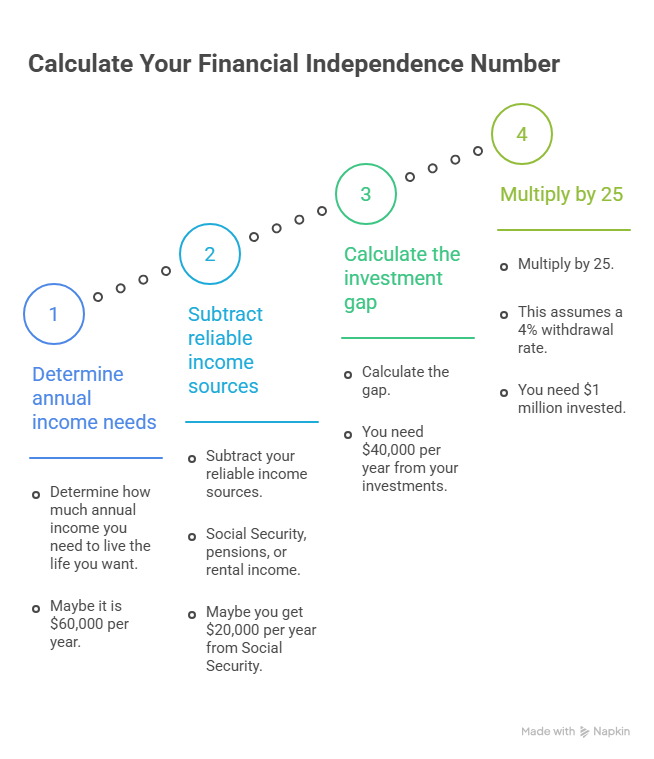
Roy emphasizes the importance of knowing your financial independence number. This is the amount of money you need invested so that the income it generates covers your lifestyle expenses.
Here is how to calculate it. First, determine how much annual income you need to live the life you want. Maybe it is $60,000 per year. Second, subtract your reliable income sources. Social Security, pensions, or rental income. Maybe you get $20,000 per year from Social Security. Third, calculate the gap. You need $40,000 per year from your investments. Fourth, multiply by 25. (This assumes a 4% withdrawal rate.) You need $1 million invested.
Now you have a target. You have a number. You can build a plan to reach it. You can automate your savings. You can track your progress. Instead of vague financial worry, you have a concrete goal and a path to reach it.
Automation Turns Good Intentions Into Reality
Roy stresses that automation is critical. Good intentions do not build wealth. Automation does.
Set up automatic drafts. Every month, money automatically moves from your checking account into savings, investments, and debt paydown. You do not have to think about it. You do not have to have willpower. It just happens automatically.
This is how you turn financial stress into financial progress. Not through pain. But through systems. Through defense and offense working together. Through clarity about your goal. Through automation that makes it inevitable.
Calculate Your Financial Independence Number
The Shift in Perspective
Roy’s central message is a shift in perspective. Stop thinking of financial habits as pain. Start thinking of them as progress.
A budget is not restriction. It is control.
An emergency fund is not hoarding. It is security.
Insurance is not waste. It is protection.
Debt payoff is not deprivation. It is freedom.
Saving and investing is not sacrifice. It is building your future.
When you make this shift, everything changes. What felt painful becomes empowering. What felt like deprivation becomes progress. What felt like stress becomes strategy.
Ready to Turn Your Financial Stress Into Progress?
Roy’s $500 Plan is designed to help you build a complete financial strategy that combines defense, offense, and automation.
Visit roymatlockjr.com or call 615-843-2999 to schedule a consultation. The first step is changing how you think about money. Everything else follows.
Listen to the Full Podcast
This episode explores how to shift your mindset about financial habits and turn stress into progress. Listen to the full August 1, 2026 episode of The Roy Matlock Jr. Money and Business Hour here: PODCAST: August 1, 2026
Watch the full video on YouTube: Turn Financial Stress Into Financial Progress
Business Owners on the Air with Roy
Are you a successful small business owner, or maybe you know someone who is! Roy wants to interview business owners who have success stories for inspiration to our listening audience, to share their journey from starting out to success. Nominate someone you may know, or yourself, by clicking here.
