
Your Financial Defense and Offense Checklist

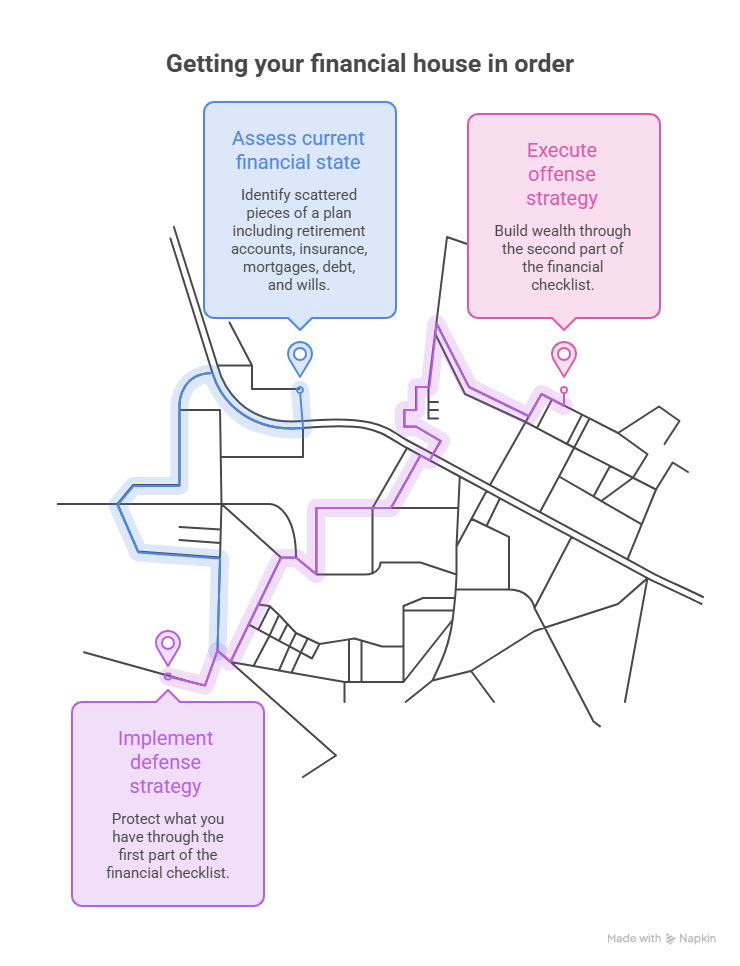
Most people do not start with a product. They start with confusion. They have pieces of a plan scattered everywhere. Some retirement accounts from old jobs. Some insurance they do not understand. A mortgage. Maybe credit card debt. A will they had drafted five years ago. But no coordinated strategy.
In this episode of The Roy Matlock Jr. Money and Business Hour, Roy lays out a practical checklist for getting your financial house in order. This checklist has two parts: defense and offense. Defense protects what you have. Offense helps you build wealth. You need both. And Roy walks through every step.
If you have ever wondered where to start or what you are missing, this episode is your answer. It is your financial playbook.
The Defense — Protect Your Foundation
Roy always starts with defense. Defense keeps you from losing. It protects your income, your family, your assets, and your future. Without a solid defense, all the offense in the world cannot help.
Defense Part One — Income and Budgeting
The first line of financial defense is income. In a world where inflation keeps pushing costs higher and technology continues to change the workplace, people must continue growing their skill set and increasing their value.
Roy stresses that income must grow. If income is not keeping up with inflation, you are slowly falling behind. A $50,000 salary today is not the same as a $50,000 salary five years ago. The cost of living has gone up. Your real purchasing power has gone down.
The answer is not to blame the economy or your employer. The answer is to become more valuable. Get more education. Develop new skills. Build your expertise. Increase your value in the marketplace. Your income follows your value.
Next comes budgeting. A good budget is not just about tracking expenses. It is about creating a “quality of life gap” between what comes in and what goes out.
When someone spends less than they make, they create room to save, invest, reduce stress, and make better long-term decisions. Roy recommends the draft account system. All income goes into the account. Bills and savings are automatically drafted out. Then you manage weekly spending. The rest takes care of itself.
Defense Part Two — Emergency Fund and Insurance
Roy emphasizes the importance of building an emergency fund. He recommends automating savings so that money is drafted consistently into a liquid account. Three to six months of expenses is the goal.
The emergency fund protects people from dipping into long-term investments, paying penalties, or taking on debt when unexpected expenses come up. It also allows a person to raise insurance deductibles and self-insure smaller risks over time.
Life insurance is another major part of the defense checklist. Roy stresses that families with children need proper life insurance coverage, often starting with term life insurance. The goal is not to make someone rich, but to protect the family’s lifestyle, mortgage, income needs, and future education expenses if something happens.
Roy also emphasizes disability income insurance, health insurance, home and auto coverage, renter’s or homeowner’s insurance, liability protection, and personal umbrella coverage. Insurance should be reviewed regularly because many people either do not have enough of the right coverage or are paying for unnecessary extras.
Defense Part Three — Debt and Estate Planning
Roy discusses the critical difference between good debt and bad debt. Bad debt is usually debt tied to things that go down in value or debt that stretches the household budget too thin. Credit card debt, car payments, and unaffordable housing can all create financial pressure and destroy your ability to save.
Good debt, by contrast, should be affordable and tied to something that can appreciate over time. A mortgage on a home you can easily afford is good debt. Borrowing for business equipment that produces income is good debt. The test is simple: can you afford it? Does it make sense?
The final piece of the defense checklist is estate planning. Roy discusses the need for wills, trusts, financial powers of attorney, health care powers of attorney, and updated beneficiaries. Many families struggle after a death or incapacity simply because the right paperwork was never put in place.
The Offense — Build Your Wealth
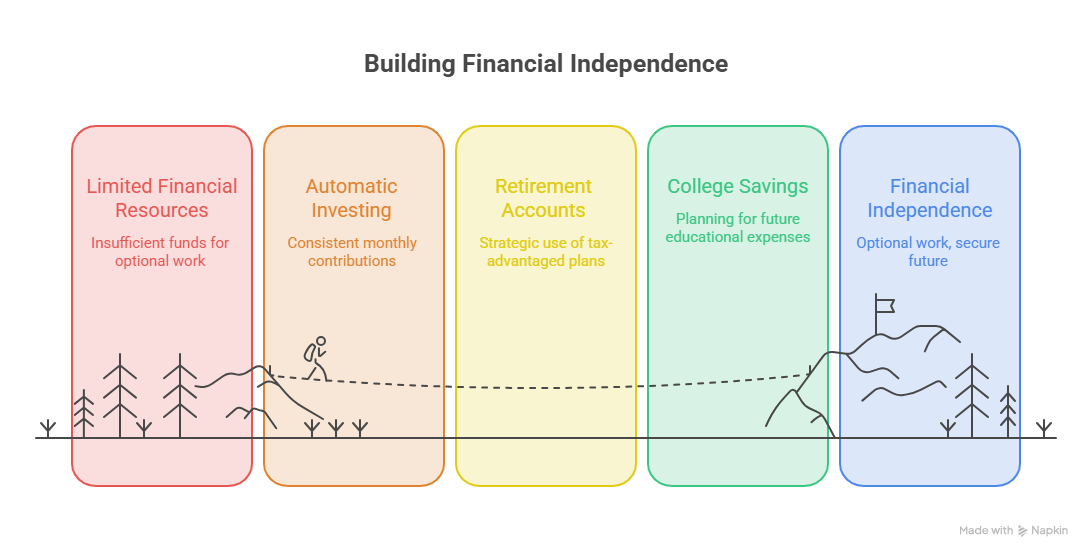
Once you have the defense in place, you move to offense. Offense is about building wealth. It is about accumulation and growth. It is about turning your income into a financial independence number that allows you to never work again if you choose.
Offense Part One — Automatic Investing
The first offensive move is simple: get started. Roy highlights the power of automatic monthly investing. Whether the money goes into a Roth IRA, investment account, retirement plan, or college savings plan, the key is consistency.
Roy explains that automating the habit removes the need to think about it every month. You set it up once. Then it happens automatically. Month after month. Year after year. Compound interest does the heavy lifting.
Roy identifies the first major accumulation goal as reaching $100,000. That is the milestone where compound growth starts doing most of the work. From there, the next goal is building toward $1 million and eventually reaching your personal financial independence number. That number is the amount needed to create enough income so that work becomes optional.
Offense Part Two — Retirement Accounts and Tax Strategies
The episode covers retirement accounts and tax strategies. Roy explains the role of 401ks, 403bs, IRAs, Roth IRAs, backdoor Roth strategies, SEP plans, solo 401ks, and small business retirement plans.
He notes that business owners may be able to use retirement plans as both a tax tool and an employee benefit. The right account depends on your situation. An employee benefits from capturing the 401k match and then maxing a Roth IRA. A self-employed person has different options with a SEP or solo 401k.
The key is understanding which accounts give you tax deductions, which give you tax-free growth, and which give you tax-free withdrawals. Then you use each one strategically.
Offense Part Three — College Savings and Buckets
Roy also discusses college savings through 529 plans and UTMA or UGMA accounts. Each option has a different purpose, and the right choice depends on the family’s goals.
Toward the end of the offense, Roy explains the importance of buckets. Some buckets are based on taxation: deductible, tax-deferred, and tax-free. Other buckets are based on investment purpose: guaranteed money, growth money, income money, and conservative money.
A younger person may be able to lean heavily into growth. Someone nearing retirement may need a more balanced approach with guarantees, income planning, and risk management. The point is understanding your buckets and filling them strategically.
Defense First, Then Offense
Roy’s central message is clear: get the defense in place first, then build the offense. Protect your income by growing your value. Create margin in your budget. Build an emergency fund. Buy proper insurance protection. Eliminate bad debt. Get your estate planning documents in place.
Then automate savings. Build investment accounts. Use the right tax buckets. Let compound interest work. Watch your $100,000 turn into millions. Eventually reach financial independence.
But skip the defense and you will never make it to offense. You will be constantly dealing with emergencies, debt, and financial stress. Protect first. Then build.
Your Checklist Starts Now
Roy’s financial defense and offense checklist is not complicated. It is proven. It works every single time if you do the work.
Go through the defense checklist. How is your income growing? Do you have a solid budget? Do you have an emergency fund? Do you have proper insurance? Are you managing debt wisely? Do you have your estate planning documents in place?
Then go through the offense checklist. Are you automating your savings? Do you have the right retirement accounts set up? Are you using tax buckets strategically? Are you on pace to reach $100,000? Do you have a personal financial independence number?
If you are missing something, address it. Do not wait for the perfect moment. The best time to start was yesterday. The second best time is today.
Ready to Get Your Financial House in Order?
If you need help working through this checklist, Roy and his team can help. Visit roymatlockjr.com or call 615-843-2999 for a consultation. Download the resources. Get your budget form. Use the financial independence calculator. Then take action.
This is your financial playbook. Use it.
Listen to the Full Podcast
This episode walks through the complete defense and offense strategy with a practical checklist you can use immediately. Listen to the full July 4, 2026 episode of The Roy Matlock Jr. Money and Business Hour here: PODCAST: July 4, 2026
Watch the full video on YouTube: Your Financial Defense and Offense Checklist
Business Owners on the Air with Roy
Are you a successful small business owner, or maybe you know someone who is! Roy wants to interview business owners who have success stories for inspiration to our listening audience, to share their journey from starting out to success. Nominate someone you may know, or yourself, by clicking here.
